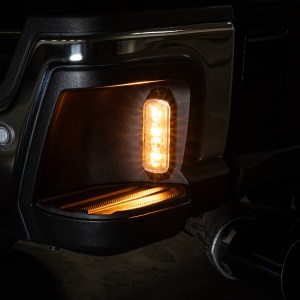
The Who, What, When, Where, and Why
If you’re considering perimeter strobes, you probably already know what they are. The bigger questions are whether they make sense for your application, what they add to your existing warning-light setup, and where they will provide the most useful coverage.
Perimeter strobes provide warning light visibility to alert approaching traffic and people nearby that a vehicle is stopped or operating in an area where caution is required.
Here’s what to consider before choosing a perimeter lighting setup.
Who Benefits From Perimeter Strobes?
Perimeter strobes make the most sense for vehicles that routinely operate around traffic, people, or equipment and need warning visibility from specific areas around the vehicle.
Common applications include:
- – Roadside service and towing: Vehicles that routinely stop on shoulders or near moving traffic.
- – Utility fleets: Trucks servicing power, telecom, gas, water, and other infrastructure along roads and in public areas.
- – Construction fleets: Work trucks moving between roads and active jobsites where vehicles operate around equipment and traffic.
- – Municipal fleets: Public works, road maintenance, and other vehicles operating in or around traffic.
- – Emergency and incident response: Vehicles that need conspicuous warning lighting while responding to or managing roadside incidents.
- – Service and maintenance fleets: Vehicles that frequently stop to perform work at customer locations, facilities, or along roadways.
The common factor isn’t the type of vehicle. It’s the environment it operates in. If your vehicle routinely works around traffic, people, or equipment, perimeter lighting can provide targeted warning coverage where you need it most.
What Do Perimeter Strobes Add?
The value of perimeter strobes is placing warning light visibility where your vehicle needs it most. Instead of relying on a single light source, perimeter lightheads let you build warning coverage around specific areas of the vehicle, including the front, sides, and rear.
Perimeter strobes can:
- – Provide a complete warning-light setup when strategically placed lightheads meet the application’s coverage needs
- – Add warning coverage to specific areas of a vehicle with existing warning lighting
- – Provide front, side, or rear visibility independently
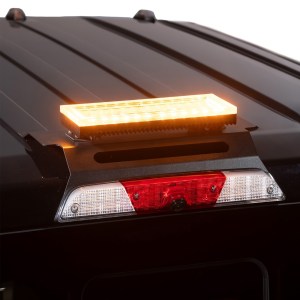
- – Offer a lower-profile alternative when a full-size rooftop light bar isn’t practical or necessary
Perimeter strobes are effective on their own or as part of a larger warning-light system.
When Are Perimeter Strobes Most Effective?
Perimeter strobes make sense when you need warning visibility from a specific area of the vehicle, at a specific height, or without installing a rooftop light bar.
Consider perimeter strobes when:
- – You need warning visibility close to the vehicle. Lower-mounted lightheads can provide direct visibility from the front, sides, or rear where a rooftop light may not provide the same coverage.
- – You need side visibility. Side-mounted lightheads can make the vehicle more noticeable to traffic passing alongside it, something a forward- or rear-facing light alone cannot accomplish.
- – You need dedicated rear or front warning. Perimeter lightheads let you concentrate warning lighting where traffic is most likely to approach.
- – You don’t want a rooftop light bar. Perimeter lightheads can provide a lower-profile warning-light solution when a full-size bar isn’t necessary or doesn’t fit the vehicle or application.
- – You already have a light bar but need more coverage. Perimeter strobes can fill specific gaps without replacing the existing system.
For example, a roadside service truck may use front and rear perimeter strobes as its primary warning lighting, while a utility truck with an existing rooftop light bar may add side-mounted lightheads to improve visibility to traffic passing alongside the vehicle.
Where Should Perimeter Strobes Be Mounted?
Mounting location should follow the coverage you need, avoid selecting placement solely on convenience or aesthetics.
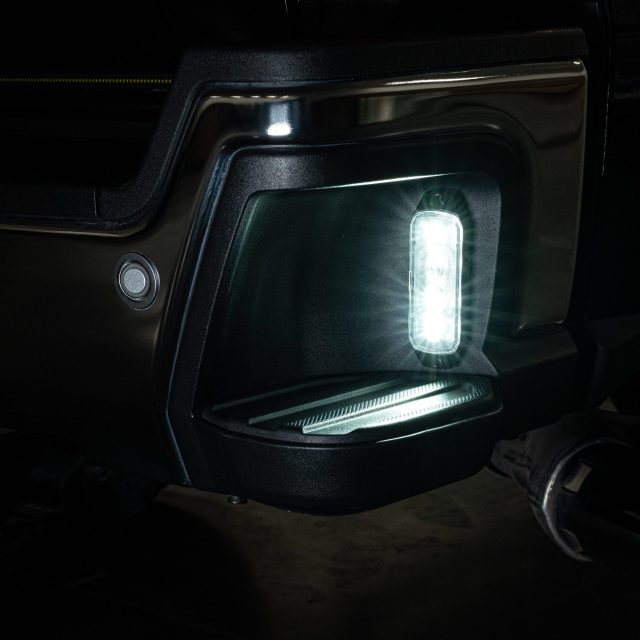
Front: Grilles, bumpers, and other forward-facing locations can provide direct warning visibility to approaching traffic.
Sides: Rocker panels, running boards, and other side-facing locations can make the vehicle more visible to traffic passing alongside it.
Rear: Tailgates, rear windows, and other rear-facing locations can provide warning visibility to traffic approaching from behind or following.
Doors and swing-out equipment: Mount lightheads on doors, access panels, ramps, arms, and other components that move independently from the vehicle.
Aerial and material-handling equipment: Add lightheads to cherry pickers, bucket trucks, lifts, forklifts, and other moving equipment where warning visibility needs to follow the working component.
Construction and industrial equipment: Use perimeter lightheads on excavators, loaders, telehandlers, and other mobile equipment where the machine itself needs additional warning visibility.
Trailers: Trailer fronts, sides, and rear sections can be equipped with perimeter lightheads to provide warning visibility around the trailer itself.
Higher mounting points: Headache racks and similar structures can provide additional mounting options when a higher warning position makes sense.
The important question isn’t “Where can I mount a light?” It’s “Where is my warning coverage weakest?”
Why Add Perimeter Strobes?
Whether you’re building a warning-light system from scratch or adding to an existing setup, perimeter strobes give you flexibility in where you provide warning visibility around the vehicle.
Then the section can explain the two paths naturally:
- – Starting from scratch: Perimeter strobes can provide the primary warning lighting when strategically positioned lightheads meet the needs of the application.
- – Adding to existing lighting: Perimeter strobes can extend warning visibility into areas your current lights don’t adequately cover.
- – Choosing a lower-profile setup: Perimeter strobes can provide warning lighting without the size and height of a rooftop light bar.
- – Adding targeted coverage: Individual lightheads let you prioritize the front, sides, rear, or a combination of locations.
For example:
Roadside service truck: May use front and rear perimeter strobes as its primary warning lighting while stopped along a roadway.
Utility truck: May add side-mounted lightheads to an existing rooftop light bar to improve visibility to traffic passing alongside the vehicle.
Delivery truck: May use perimeter strobes on the rear, doors, or swing-out panels to provide warning visibility while stopped for deliveries or operating around vehicle and pedestrian traffic.
Choosing the Right Perimeter Lighthead
Once you’ve determined that perimeter lighting makes sense for your application, look at the lighthead itself.
Consider:
- – Output: Choose a lighthead appropriate for the visibility requirements of the application.
- – Flash patterns: Multiple patterns can give you flexibility for different warning applications.
- – Construction: Look for materials and construction suited to vehicle-mounted use.
- – Weather protection: Consider the exposure to rain, road spray, dust, and other environmental conditions.
- – Mounting options: Make sure the lighthead can be installed where you need the additional coverage.
- – System compatibility: Consider how the lighthead will work with the rest of your vehicle’s warning-light system.
For demanding applications, a perimeter lighthead needs to handle the same real-world conditions as the vehicle: weather, road debris, vibration, and frequent operation.
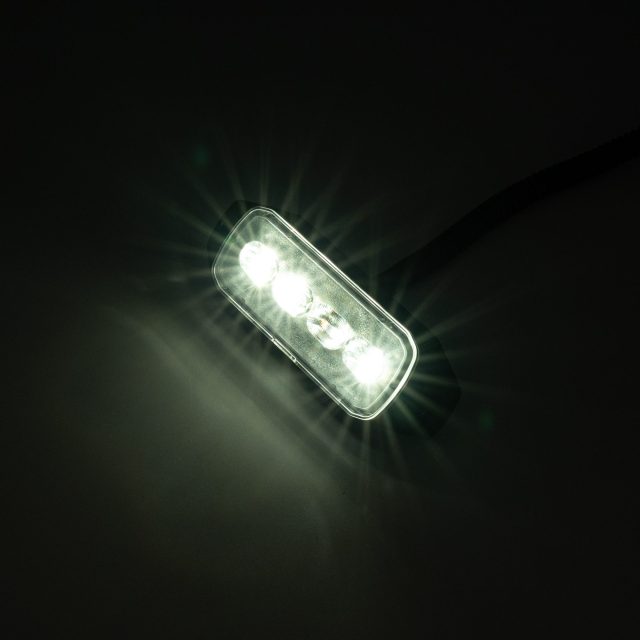
Putco YellowJacket Perimeter Lightheads provide a high-output option for applications where additional warning coverage and durable vehicle-mounted performance are priorities. Their compact design allows them to be positioned around the vehicle to build coverage where it’s needed.
Build Coverage Around the Way You Work
The right perimeter lighting setup starts with the areas that need warning visibility, not the light.
Identify where the vehicle, trailer, equipment, or independently moving components operate, then determine where warning visibility is needed. From there, choose mounting locations and lightheads that keep that visibility where it matters as the vehicle or equipment moves.
Perimeter strobes can provide targeted warning coverage as a primary lighting system, as an addition to existing warning lights, or on equipment that moves independently of the main vehicle. The goal is to keep warning visibility where it is needed, wherever the work takes place.