Hideaway Strobe Lights, Concealed LED Warning Lights, and Work Truck Strobe Systems
What are Stinger lights or Stinger hideaway strobe lights?
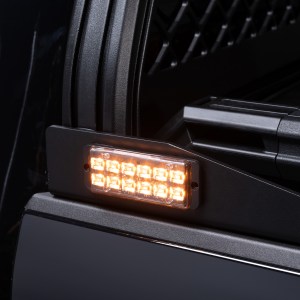
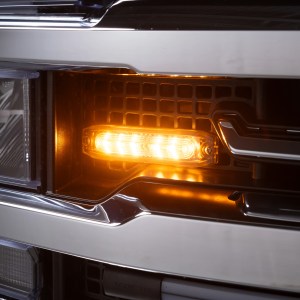
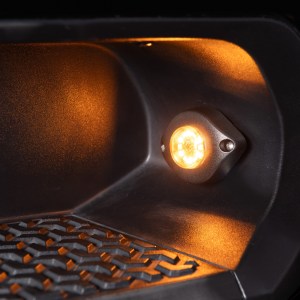
LED stinger lights, hideaway strobe lights, and concealed LED warning lights are all part of the same category, but they fill different needs depending on how they are mounted and how demanding the application is.
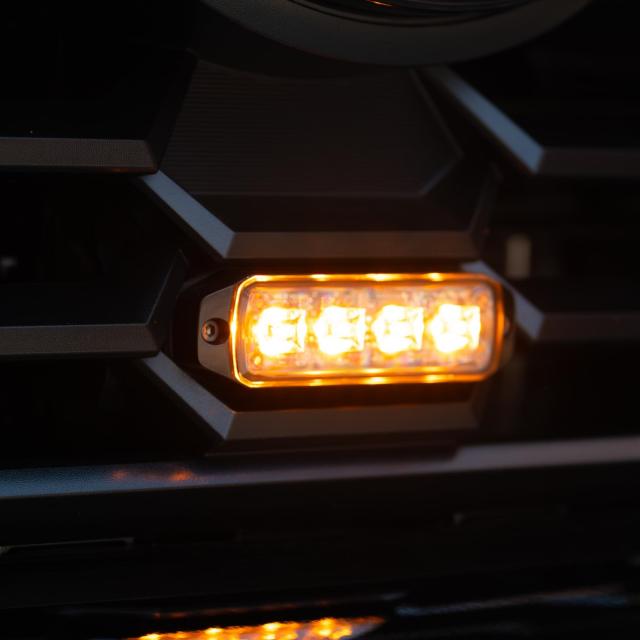
- – Stinger (standard) LED lightheads are surface-mount strobe lights built with a polycarbonate housing, designed for cost-effective installs on work trucks and fleet vehicles where reliable warning lighting is needed
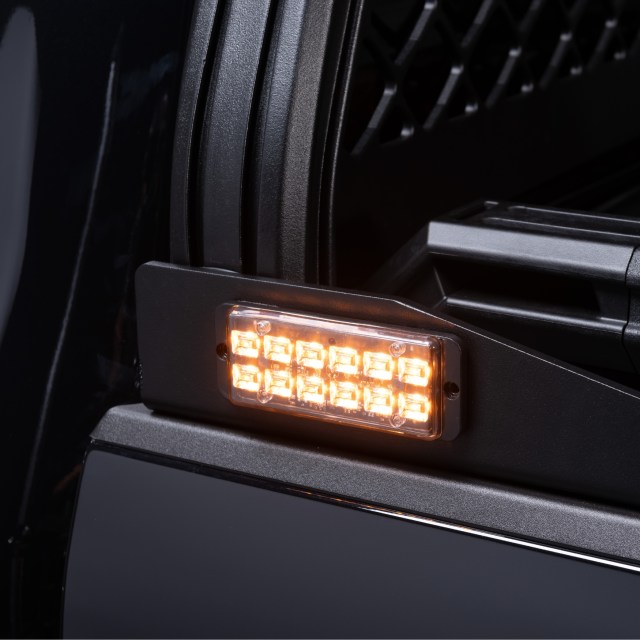
- – Stinger PRO lightheads are upgraded surface-mount LED strobe lights built with die-cast aluminum housings for improved durability, thermal performance, and long-term reliability in demanding environments like construction, utility, and fleet applications
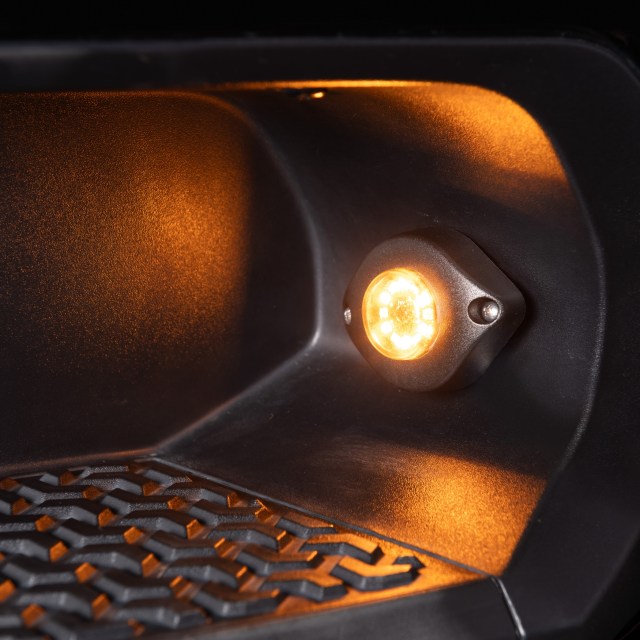
- – Stinger PRO Hideaway lights are compact LED strobe modules built with a die-cast aluminum housing and a smaller lighthead form factor, allowing installation in tight or unconventional locations where standard surface-mount lightheads will not fit, making them the most versatile option for custom installs and space-limited applications
All three fall under LED strobe lighting, but the key differences are mounting style and construction level.
surface-mount vs concealed, and standard-duty vs professional-grade
Are these installed in headlights or tail lights?
No. These are not intended for headlight or taillight drilling installs.
- – Stinger lightheads are designed to mount using their included housing, which provides proper fit, sealing, and durability
- – Installing without the correct housing leads to poor mounting, moisture intrusion, and reduced lifespan
What does TIR LED mean, and why does it matter?
All Stinger LED strobe lights use TIR (Total Internal Reflection) optics.
- – TIR optics focus and direct light output into a tighter, more intense beam pattern
- – Improves visibility in daylight, at distance, and in high-traffic environments
- – Increases recognition speed, not just brightness
How many strobe lights do I need?
That depends on how the vehicle is used and where visibility is required.
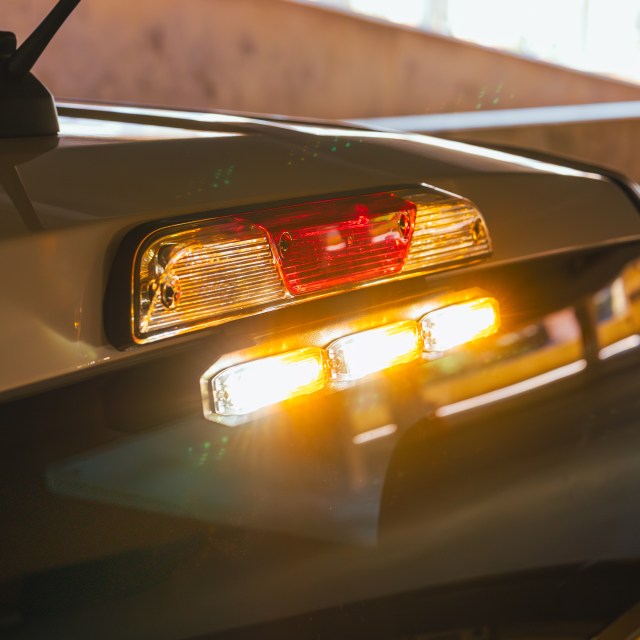
- – If you are running a roadside service or towing truck and need to alert traffic approaching from behind, a rear-focused setup is critical, and a 3-light rear chase-style configuration mounted high on the vehicle is a common and effective solution
- – If you are operating in active traffic zones where vehicles approach from multiple directions, you need front and rear coverage using forward-facing LED strobe lights and rear warning lights working together
- – If the vehicle is working in intersections, job sites, or areas with cross traffic, you need full 360-degree visibility using a combination of front, rear, and side-facing strobe lightheads
What is a chase style light?
A chase style light is a rear-facing LED strobe light setup designed to improve visibility to vehicles approaching from behind in low-visibility or high-risk environments.
- – Used as a safety-focused warning system on work trucks, contractor vehicles, utility fleets, and off-road or convoy applications, chase lights are typically mounted high on the rear of the vehicle to remain visible over traffic, dust, snow, or road spray, and often use multiple synchronized LED strobe lightheads to create a wide, attention-grabbing warning pattern that helps reduce rear-end collisions in conditions like roadside work, towing, construction zones, and poor weather driving
Are LED strobe lights waterproof?
Yes, but ratings matter.
- – High-quality LED strobe lights are rated IP69K for resistance to high-pressure washdowns, harsh weather, and demanding work environments
- – Lower-rated lights are more prone to moisture intrusion and long-term failure
How are stinger lights wired?
LED strobe lights are hardwired into the vehicle’s electrical system.
- – Connected to a 12V power source, grounded to the chassis, and configured with pattern and sync wires, with supported models compatible with the Luminix Tap-N-Sync Wireless Remote for wireless control
Do these lights remember the last pattern?
Yes.
- – All Stinger LED strobe lights retain the last selected flash pattern after power is turned off, ensuring consistent operation
What certifications do these lights meet?
Professional-grade LED strobe lights are designed to meet or exceed multiple industry standards.
- – SAE J875 for warning light performance
- – SAE J578 for color standards
- – SAE J1889 for LED signal modules
- – ECE R65 for international warning light compliance
- – ECE R10 for electromagnetic compatibility
These standards ensure visibility, reliability, and consistent performance.
Are these strobe lights legal?
LED strobe light legality depends on location and use.
- – Amber LED strobe lights are widely used for work trucks, while blue and red are typically restricted, and regulations can vary by state and region
- – Always check local laws and verify compliance when traveling between states or operating in different areas
How long can you run strobe lights with the truck off?
This depends on your setup. With the engine off, LED strobe lights draw directly from the battery, so runtime is determined by how much current your system pulls and how much usable capacity your battery has.
- – To calculate this, use a multimeter to measure the actual amp draw of your strobe light setup by placing the meter in series with the power wire (or using a clamp meter if available), then take your battery’s approximate usable capacity (typically 20–30 amp-hours for a standard truck battery without risking a no-start) and divide that by your measured amp draw to estimate runtime in hours
Example in plain terms:
- – If your lights draw 4 amps total and you have ~25 usable amp-hours
- – 25 ÷ 4 = about 6 hours of runtime
What this does:
- – Removes guesswork
- – Accounts for your exact setup (number of lights, wiring, etc.)
- – Gives a realistic runtime instead of generic estimates
Important real-world factors:
- – Battery condition and age will reduce available capacity
- – Cold weather significantly lowers runtime
- – Other electronics running at the same time will reduce available power
The key takeaway is that runtime is not based on number of lights alone. It is based on total amp draw, and a multimeter is the most accurate way to determine that for your specific setup.
What causes strobe lights to fail?
A combination of installation, environmental conditions, and product quality typically causes strobe light failures.
- – Poor installation, such as bad grounds, loose connections, improper fusing, or incorrect wire routing, is a leading cause of failure
- – Water intrusion from improper mounting or damaged seals can lead to corrosion and electrical issues
- – Heat buildup, especially in lower-quality housings, can reduce lifespan and output
- – Voltage inconsistency or poor wiring can cause flickering or premature failure
- – Physical damage from vibration or improper mounting can compromise internal components
- – Low-quality LED components degrade faster over time
Who are these lights for?
LED stinger lights, hideaway strobe lights, and concealed LED warning lights are built for professional use where visibility, safety, and jobsite awareness are critical.
- – Contractors and service professionals (utility service trucks, oilfield pickups, HVAC service vans, plumbing trucks, electrical contractor trucks, mobile service rigs)
- – Roadside assistance and towing operators (tow trucks, roadside assistance vehicles, recovery trucks, mobile mechanic trucks, lane closure support vehicles, traffic control trucks, construction zone vehicles)
- – Fleet and municipal operators (bucket trucks, digger derricks, boom trucks, municipal service vehicles, DOT and public works trucks, snow plow trucks, highway maintenance vehicles)
- – Commercial and trade crews (general contractors, excavation crews, paving crews, concrete trucks, landscaping fleets, equipment haulers, service body trucks)
Do Stinger strobe lights work on service body trucks?
Yes. Stinger Pro 12 and other Stinger lightheads are designed for 12V systems, which is what service body trucks and pickup-based work trucks use. They wire directly into upfitter switches, switch panels, or auxiliary fuse blocks.
Are service body trucks 12V or 24V?
Service body trucks built on pickup platforms use 12V electrical systems. This includes contractor trucks, utility trucks, and most fleet service vehicles. 24V systems are typically found on heavy-duty commercial equipment, not standard work trucks.
Do I need a 12V or 24V strobe light?
Most vehicles determine this for you based on their electrical system.
- – Pickup trucks and light-duty vehicles use a 12V system
Examples include Ford F-150, Ford Super Duty (F-250 / F-350), Chevy Silverado 1500 / 2500 / 3500, GMC Sierra, and Ram 1500 / 2500 / 3500. These are the most common platforms for truck strobe light installs using upfitter switches or aftermarket switch panels.
- – Heavy-duty trucks, some fleet vehicles, and equipment may use a 24V system
Examples include semi trucks like Freightliner, Kenworth, and Peterbilt, along with dump trucks, utility fleet vehicles, construction equipment, and some trailers with independent electrical systems.
Many modern LED strobe lights for trucks, including Stinger lightheads, are designed to operate on 12–24 VDC, meaning they can work on either system.
For most pickup truck strobe light installs, the lighting system is wired into a 12V switch panel or upfitter system, so a standard setup will function as a 12V system regardless of the light’s full voltage range.
If you are installing on a 24V truck, trailer, or heavy equipment, choosing a 12–24 VDC strobe light allows direct installation without needing a voltage converter.
How are Stinger strobe lights controlled on a truck?
Stinger lightheads are typically wired into 12V upfitter switches, rocker switch panels, or relay-controlled circuits. Pattern selection is done through a dedicated control wire, allowing you to change flash patterns without rewiring the system
Can I install multiple Stinger lights on one truck?
Yes. Stinger lightheads are designed to sync across multiple units. This allows you to run grille strobe lights, bumper strobes, and rear warning lights together using synchronized or alternating flash patterns from a single control setup.
Where are Stinger strobe lights typically installed on a work truck?
- – grille strobe lights
- – front and rear bumpers
- – headache racks
- – service body compartments
- – flatbeds and toolboxes
These surface-mount LED strobe lights are designed to fit a wide range of truck lighting setups.
Do Stinger lights require a controller or can they be wired to a switch?
Stinger lightheads do not require a separate controller and can be wired directly to a switch.
They are typically installed using:
- – 12V or 24V switch panels
- – Upfitter switches
- – Relay-based auxiliary circuits
Each light uses a main power and ground connection, along with trigger wires for changing flash patterns and synchronization.
In most truck strobe light wiring setups, this means you can control the lights directly through your existing switch system without needing an external control module.
What is an upfitter system on a truck?
An upfitter system is a set of factory-installed auxiliary switches and wiring provided by the truck manufacturer, typically found on work trucks like Ford Super Duty, Ram HD, and GM HD models. These switches are pre-wired to a 12V power source and allow you to easily connect accessories like strobe lights, work lights, air compressors, or light bars without building a custom wiring harness.
What kind of controller or switch do I need for strobe lights?
Most installs use a standard 12V switch or switch panel. This can include factory upfitter switches, aftermarket rocker switch panels, or relay-controlled auxiliary switches. Strobe lights like the Stinger Pro 12 are typically hardwired with a power wire, ground, and a pattern control wire, allowing you to turn the lights on/off and change flash patterns through your switch setup
Can I use a wireless remote to control Stinger strobe lights?
It depends on the model. The standard Stinger lightheads are compatible with the Luminix Tap-N-Sync Programmable Remote 93020 (sold separately), which allows you to control flash patterns and synchronization wirelessly
The Stinger PRO Lighthead, including the Stinger Pro 12, is not compatible with the Putco Luminix Tap-N-Sync Programmable Wireless Remote. These lights are controlled through direct wiring using a switch or control wire.
Do I need a relay to install strobe lights?
In most cases, a relay is not required for individual strobe lights since they have a low amp draw. However, when running multiple lights on one switch or integrating into a larger accessory system, using a relay or fuse block can help protect the circuit and keep the wiring clean.
Can I run multiple strobe lights off one switch?
Yes. Multiple strobe lights can be wired to a single switch or upfitter circuit, as long as the total amp draw stays within the circuit’s rating. This is common for setups with grille strobe lights, bumper lights, and rear warning lights all controlled from one switch.
Can I install strobe lights on a trailer or move them between vehicles?
Yes, but this is where voltage compatibility matters.
Many modern LED strobe lights for trucks, including Stinger lightheads, are designed to operate on 12–24 VDC, allowing them to be used across different vehicles and equipment without modification.
This becomes especially useful when:
- – Installing on trailers with independent electrical systems
- – Moving lights between pickup trucks and 24V vehicles
- – Using the same lights across mixed fleets or heavy equipment
In these situations, a 12–24 VDC strobe light can be connected directly without needing a voltage converter or a separate version of the product.
Do I need to sync my strobe lights, or can they run independently?
You can run strobe lights either way.
Syncing allows multiple lights to flash together or alternate in a controlled pattern, which improves visibility and creates a more coordinated, professional setup. This is common on multi-light truck strobe systems where consistency matters.
Running lights independently is simpler and gives you more control over each light. This setup is often used when:
- – Lights are wired to separate switches
- – Different zones (front, rear, sides) need to be activated independently
- – You want the ability to turn specific lights on or off as needed
In most truck strobe light wiring setups, the choice comes down to how you want to control the system. Syncing provides uniform behavior, while independent wiring with separate switches offers more flexibility.
Final takeaway
LED stinger lights, hideaway strobe lights, and concealed LED warning lights are purpose-built for real-world work truck applications.
- – TIR optics improve visibility and recognition
- – Included housing ensures proper mounting and durability
- – Scalable setups support everything from simple rear warning to full vehicle coverage
- – Designed to meet professional standards for performance and reliability
When installed based on real-world use and visibility needs, these systems deliver effective, professional-grade warning lighting.
See It For Yourself!
Explore More Stinger Guides
- – New Product: Stinger Grille Brackets
- – New Product: Stinger Chase Light Kit
- – Putco Stinger vs Stinger PRO vs Stinger PRO Hideaway: Which One Do You Need?
- – Stinger 950204 vs PrimeLux PSW0612A Strobe Lights
- – How to Install Stinger LED Lightheads on a Truck
- – Stinger PRO 12 vs Buyers Products Thin Dual Row