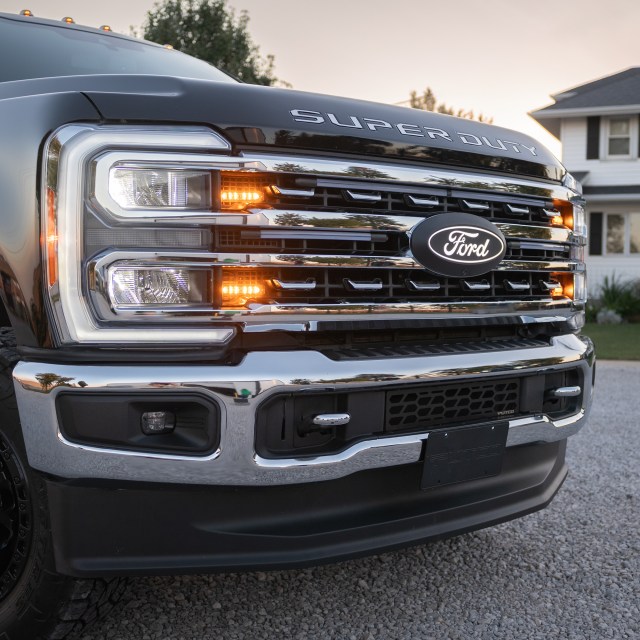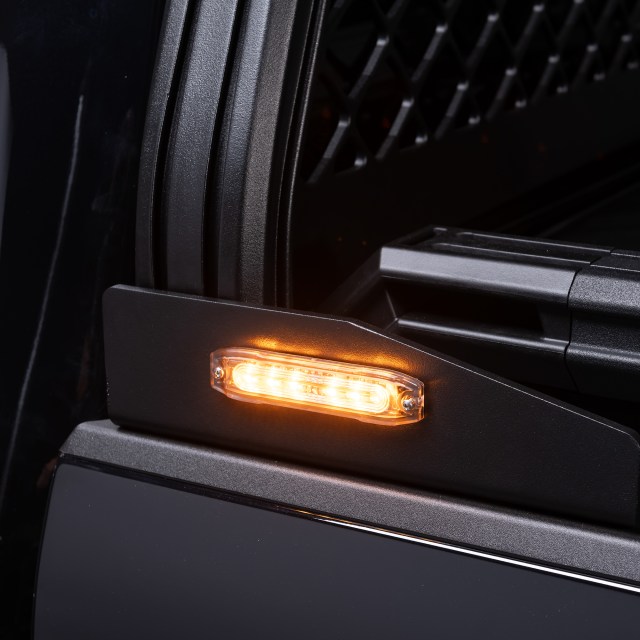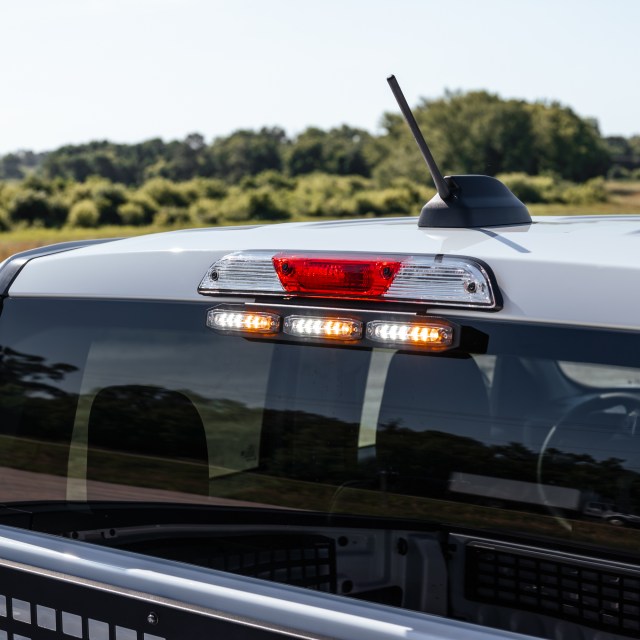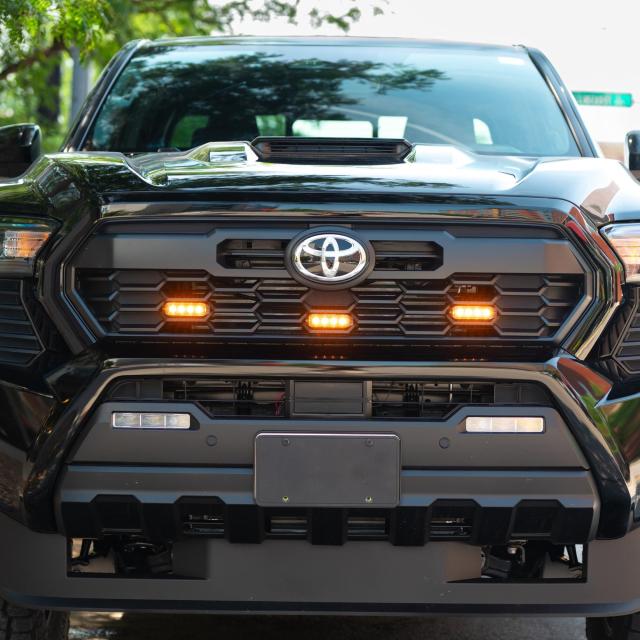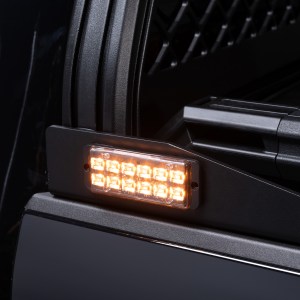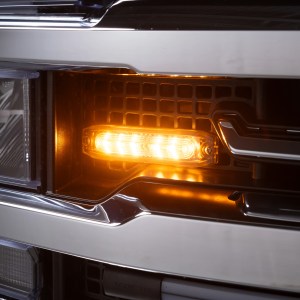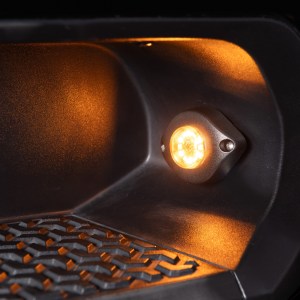
When comparing the Putco Stinger (Amber + White) and PrimeLux (Amber) LED strobe lights, both systems offer core features like synchronization and multi-light capability. The real differences are not in whether they can be expanded, but in how they perform on the vehicle.
From durability and TIR optical performance to flash pattern control and real-world use cases, each system is designed with a different type of user in mind. Understanding these differences helps determine which strobe light is better suited for fleet standardization versus custom or performance-driven setups.
1. Installation Flexibility
Stinger
- – Sold in multiple pack sizes (1, 2, 4, etc.)
- – Individual lightheads allow independent placement across the vehicle
- – Common mounting:
- – Grille
- – Bumper
- – Headache rack
- – Side steps
PrimeLux
- – Sold as pairs
- – Supports synchronization and alternating across multiple units
- – Typically deployed in:
- – Left/right front bumper setups
- – Rear-facing pairs
- – Can scale beyond two lights through sync wiring
When this matters:
A contractor setting up a basic front bumper warning system could use either product. However, if they later want to add grille lights, rack lights, and rear-facing coverage, both systems can expand, but Stinger is more commonly configured this way in practice due to how it is packaged and sold.
Takeaway:
Both systems support expansion and synchronization. The difference is not capability, but how they are typically deployed and scaled.
2. Build & Durability
Stinger
- – Polycarbonate housing
- – Fully sealed construction
- – Rated IP69K
PrimeLux
- – Die-cast aluminum base
- – Polycarbonate lens
- – Rated IP67
What actually matters:
- – IP69K (Stinger) = designed for high-pressure, high-temperature washdowns
- – IP67 (PrimeLux) = protected against water immersion, but not pressure washing
Material alone does not determine durability:
- – Polycarbonate absorbs impact and vibration better
- – Aluminum provides rigidity but relies on seals between components
When this matters:
A snowplow truck operating in winter will encounter road salt, slush, and frequent pressure washing. The Stinger’s IP69K-sealed design withstands repeated washdowns better. The PrimeLux unit will handle normal weather exposure, but repeated high-pressure cleaning increases the risk of seal fatigue over time.
Takeaway:
PrimeLux uses a more rigid aluminum base, but Stinger is better suited for harsh environments due to its IP69K sealed construction and resistance to pressure washing and contamination.
3. Flash Patterns & Control
Stinger
- – 40 flash patterns (Amber/White)
- – Sync capable across multiple units
- – Supports multi-light coordination
PrimeLux
- – 10 selectable flash patterns (Amber)
- – Sync capable across multiple units
- – Supports simultaneous and alternating sync across multiple units
When this matters:
Fleet vehicles are typically assigned to specific roles or long-term contracts, often with the same operators running those trucks. Because of this, lighting systems are standardized during installation and remain consistent across the fleet, with the same flash pattern, wiring, and control setup used on every vehicle. Using a single light platform across all trucks simplifies installation, reduces training, and ensures predictable performance in the field. While patterns are rarely changed once deployed, having additional pattern options ensures the fleet can adapt to future requirements without needing to replace or reconfigure equipment.
On the other hand, individual users, small crews, and custom truck builds are more likely to fine-tune lighting behavior beyond the initial setup. This could be a contractor, a tow operator, a single work truck owner, or even a custom build where the user is hands-on with how the vehicle performs. For example, a user may choose a faster, more aggressive pattern during daytime roadside work to improve visibility, then switch to a slower, more controlled pattern at night to reduce glare. If multiple lightheads are installed, they may also configure zones, such as alternating left and right sides, separating front and rear timing, or syncing all lights for a unified pattern.
Because these setups are often installed and adjusted by the end user, there is more willingness to experiment and refine the behavior over time. In these cases, having more available patterns and flexible control allows the user to dial in how the system performs across different conditions, even if those adjustments are made infrequently.
Takeaway:
PrimeLux prioritizes simplicity and consistency. Stinger offers more pattern variety and flexibility when configuring larger or more customized lighting setups.
4. Output & Visibility
Stinger
- – Uses TIR LED optics
- – Designed for focused light output and faster recognition
PrimeLux PSW0612A
- – 6 LEDs per unit
- – SAE Class 1 rated output
- – Traditional wide-angle strobe output
What matters here:
- – TIR optics focus and direct light more efficiently
- – This improves how quickly the human eye recognizes the signal, not just brightness
When this matters:
Whether in bright daylight, low-light transitions, or nighttime use, drivers approaching at speed need to recognize a hazard quickly. A focused TIR LED optic produces a concentrated, high-intensity warning signal that cuts through ambient light and maintains visibility at a distance. Compared to a more diffused LED strobe pattern, this results in a sharper, more recognizable signal, improving safety for work trucks, roadside assistance vehicles, and emergency strobe light applications.
Takeaway:
Both provide strong visibility, but Stinger’s TIR optics are designed to improve signal recognition, not just raw brightness.
Final Verdict
Choose Stinger if:
- – You want maximum environmental durability (IP69K-rated construction)
- – You want flexible flash pattern options for different use cases
- – You are building a customized or multi-zone lighting setup
- – You value optimized optical performance with TIR LEDs for better daytime and long-distance visibility
Choose PrimLux if:
- – You want a simple, standardized lighting system across multiple vehicles
- – You are outfitting fleet or equipment with consistent behavior and minimal setup variation
- – You need 10–30V compatibility for mixed vehicle types
- – You prefer fewer patterns with straightforward control and synchronization
Bottom line:
Both systems support synchronization and scalable installs. The real decision comes down to flexibility versus standardization. Stinger is better suited for users who want higher durability, stronger optical performance, and the ability to fine-tune their setup. PrimeLux is ideal for fleets or applications where ease of installation, consistent behavior, and simplified control are the priority.
See It For Yourself!